
03
Pricing Methodology
We leverage our open license bundling methodology, Standard Service Packages (SSPs), and our healthcare pricing database, Clear Rates, to generate comprehensive price estimates for shoppable services and procedures.
About our Standard Service Packages (SSPs)
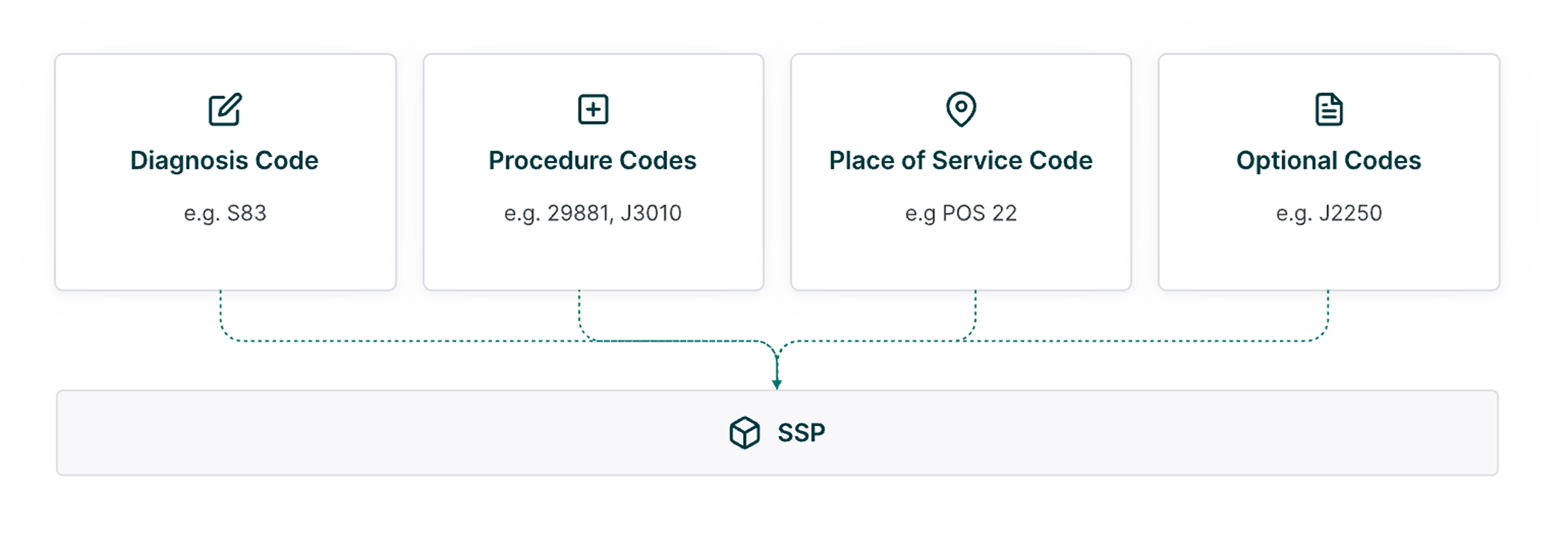
Standard Service Packages (SSPs) are bundles of clinically related codes that represent what a patient actually gets billed on a claim. SSPs make healthcare costs comprehensive, accurate, and relevant for patients.
We use historical claims to identify what most commonly gets billed alongside each primary procedure code, so each bundle represents an “expected” claim. All services, materials, and fees associated with a healthcare procedure are consolidated into a single package — including revenue codes, professional fees, and ancillary services such as labs and drugs.
SSPs can be structured at three different levels of care: individual procedures or discrete clinical services (“items & services”), single-visit procedures (“encounters”), or multi-visit care journeys for a specific condition (“episodes”).
Most importantly, SSPs are consumer-first. They intuitively reflect the way a patient should expect to find, receive, and ultimately pay for care. You can access our full, open-source library and read more about our methodology here.
How our Pricing Data is Sourced and Validated
Turquoise obtains pricing data from all relevant pricing signals, including payer and hospital Machine Readable Files (MRFs), Medicare reference data, and historical medical claims.
Our pricing engine, Clear Rates, synthesizes all available sources — spanning reimbursement methodologies such as per diem and case rates — to deliver a single, authoritative rate for every provider–payer–SSP combination.
Each price is derived by intelligently associating rates from our pricing engine into relevant SSPs. All prices surfaced through our API have passed our verification process, which requires each rate to be published by at least the provider or the insurer, demonstrate low variability, and be corroborated by historical claims data.
The final result is a representative, consumer-friendly price that accounts for care delivery bundles and the nuances of upstream contract methodology.